

The South African - German Energy Partnership promotes the energy policy dialogue between South Africa and Germany. It fosters collaboration between government partners and stakeholders from industry and research to enhance energy security, advance decarbonisation, and enable trade and investment in the context of the energy transition.


Insights and Updates
Clean Trade and Investment Partnership signed

The EU and South Africa signed the first Clean Trade and Investment Partnership (CTIP). It aims to create new trade and investment opportunities, promote concrete business interests on both sides, and support decarbonization goals by facilitating trade and investment and promoting regulatory cooperation and clean technologies.The focus sectors are (1) renewable energy and low-carbon technologies, (2) electricity transmission infrastructure, (3) clean fuels, including sustainable fuels for aviation and maritime transport, (4) raw materials and mineral value chains, and (5) technologies for mitigating climate change and adapting to its consequences. For regular updates follow us on LinkedIn
South Africa and Germany turn the energy transition into shared economic success
Through joint activities South Africa and Germany aim to:
-
Nurture joint innovation for future technologies.
-
Promote market access and foreign investment that benefit both countries.
-
Secure independence and resilience in the global economy.
Focus Areas
Currently the South African - German Energy Partnership is addressing the following key areas of the energy transition.
The future of the power sector

The integration of intermittent renewables requires new approaches to the management of power systems - from advanced storage technologies and digital solutions to flexible grid operations that enhance reliability and resilience.
Renewable hydrogen and Power-to-X
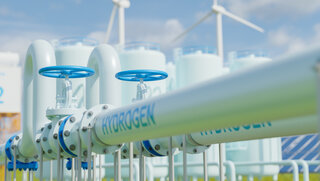
With its strong renewable hydrogen potential, South Africa can drive domestic value creation through hydrogen derivatives and global export. The Hydrogen Task Force between South Africa and Germany acts as a formal format of the Energy Partnership to discuss the opportunities around renewable hydrogen.
Clean trade and industrial development

The energy transition is driving industrial development by unlocking innovation and new value chains in fields such as batteries and electromobility, electrolysers and sustainable fuels and by enhancing industrial competitiveness through efficiency gains and decarbonisation.